

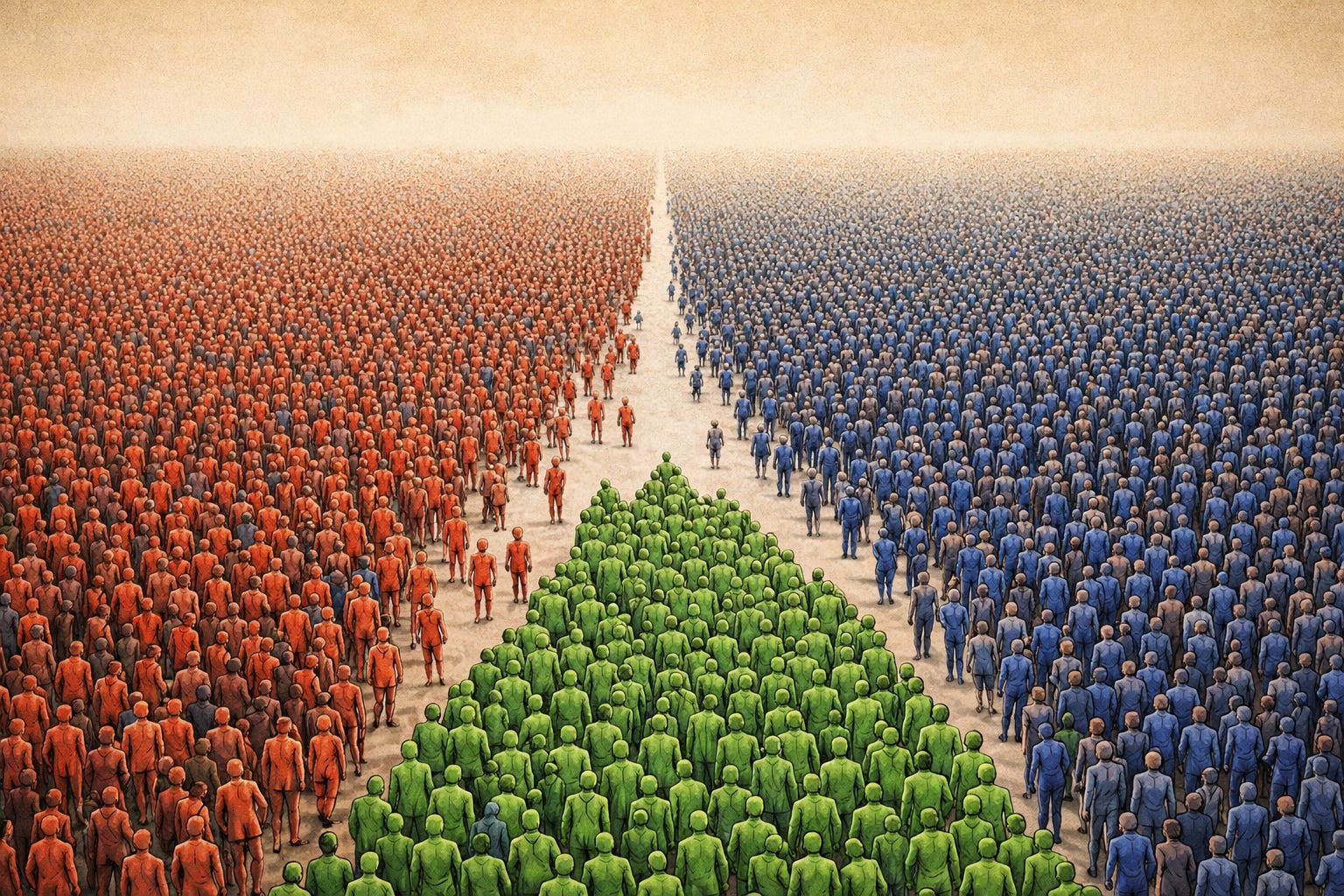
Some of the leading polarization scholars and organizers gathered at UC Berkeley on the first Friday of this month to discuss potential solutions to toxic polarization — including some of the people whose work we’ve featured in the past like Jen McCoy and David Broockman.
Here are three of the most interesting talks I attended, on different ways of visualizing our divisions, the origins of the “culture” war, and some polarization myth-busting.
Beyond Left and Right
Here at BCB we use “Red” and “Blue” because it avoids getting into arguments about what “liberal” and “conservative” really mean. We know there aren’t really two homogeneous sides… but then what are the sides? Mina Cikara presented a paper where she and colleagues mapped the space of political attitudes. The lovely thing about this work is how many different ways they made their maps, in order to ensure that they weren’t misled by any one dataset.
For example, they took data from the long running ANES survey where people were asked “How you do feel about group X?” where X was things like “environmentalists,” “the Supreme Court,” “Republicans,” and so on. People who answered most similarly along all of the questions are grouped closer together in this chart.
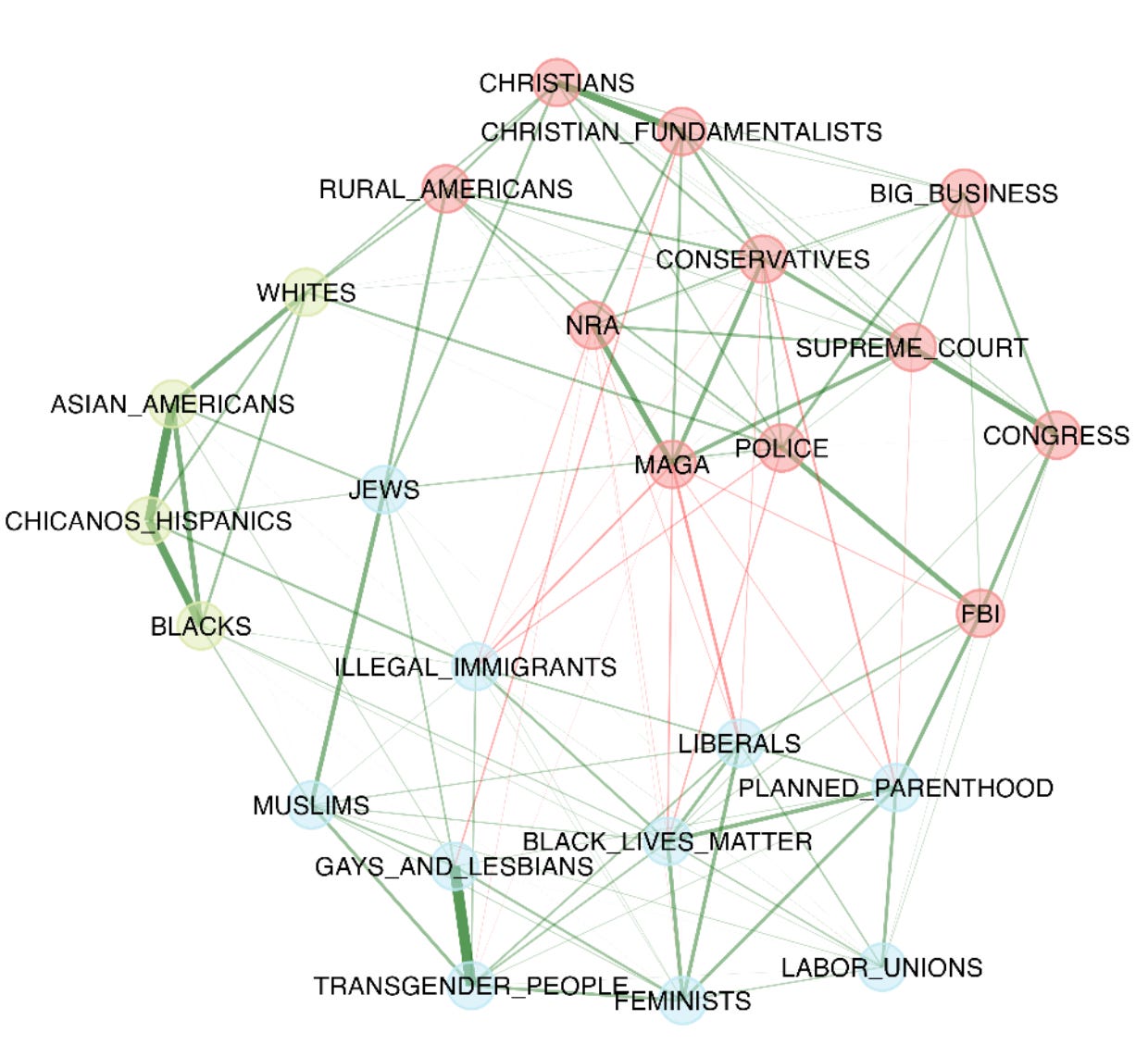
This produces three clusters, two of which roughly correspond to the traditional red/blue, but also a green cluster which has racial categories separately.
In another experiment, they directly asked people how closely two groups were aligned, for every pair of the 12 groups in this plot.
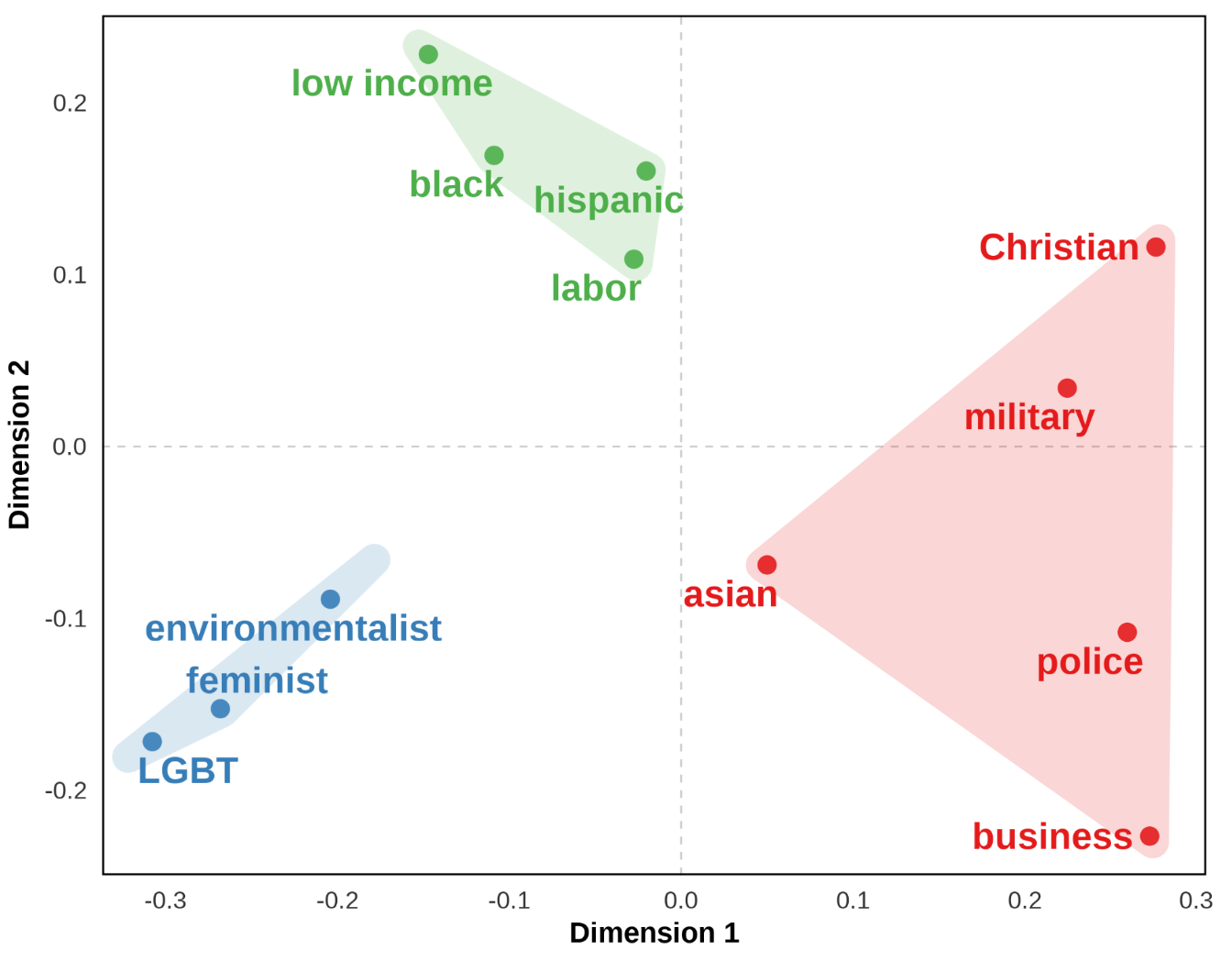
This also finds three groupings, but the unexpected third group is a little different: it groups low income, black, hispanic, and labor. Perhaps these are the seeds of a new, economy-focused political coalition?
The beauty of these sorts of maps is that they don’t assume any particular axis of division, but rather let the data speak for themselves. This continues a long and useful tradition — such as More in Common’s political tribes or the types of Trump voter — that help us see ourselves as something just a little more nuanced than Red vs. Blue. And maybe, that sort of shift in self perception is a key to better conflict.
Why is the culture war about culture?
Akaash Rao asked a very interesting question: why are we bogged down in a “culture” war, as opposed to an “economics war” or a “foreign policy war” or all the other ways we might disagree?
He analyzed television data since 1960 to show that news media disproportionately talk about “cultural conflict,” even more so since the advent of cable in the 1980s, while political ads have focussed on “healthcare, taxes, jobs, and social insurance” instead.
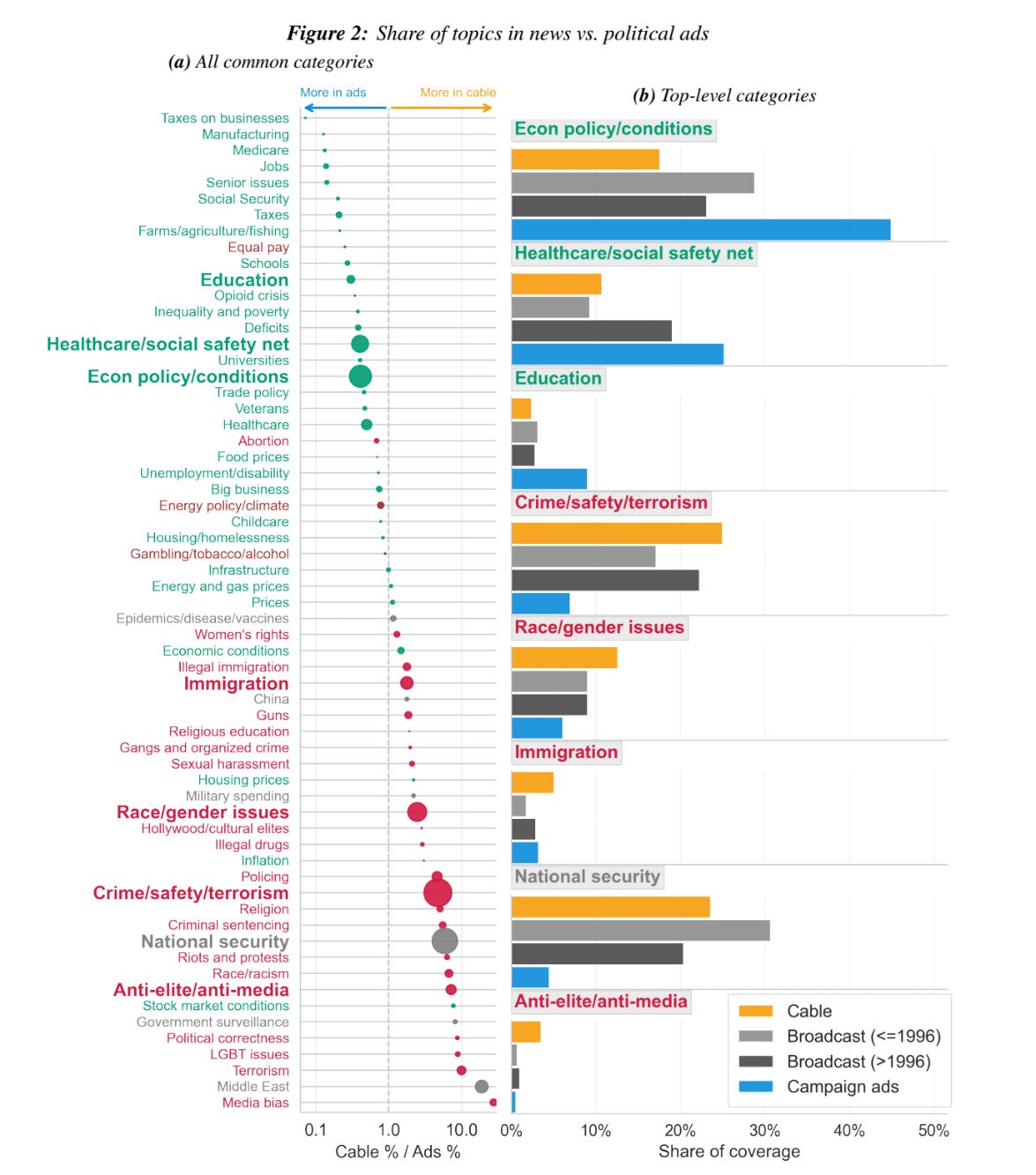
Our media constantly talks about culture because, the data shows, this topic is really good at attracting new viewers. Media sources don’t care where new audience comes from, which means they’re happy to have people who would otherwise watch nothing at all. Rao calls “mobilization,” which is easier than stealing viewers from a competitor.
But a politician wins based on the difference between votes for them and votes for the opponent, so they would much prefer to “poach” people from the other side — they’d prefer it twice as much as “mobilizing” the same number of people. And it turns out that talking about “economics” poaches people more reliably than talking about “culture.”
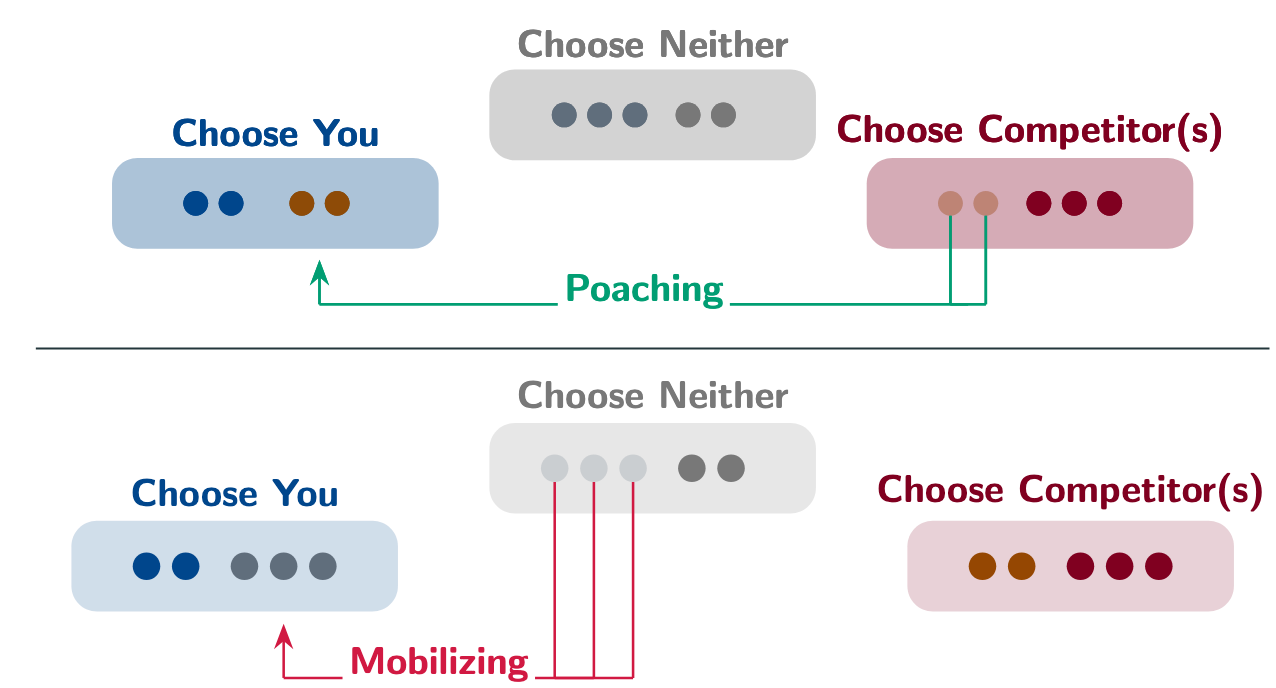
Rao points out that cable news are not the only “size maximizers.” Interest groups, protest movements, social media influencers, all have greater incentives to lean into mobilization vs. poaching. This means that we should expect polarization to be led by such size maximizers, with politicians coming later and following the incentives of pre-existing divisions.
For more, here’s an interview with Rao, or see the paper.
We actually do disagree, but we’re persuadable
David Broockman took aim at two common misconceptions of polarization:
we all actually mostly agree and aren’t very extreme
people can’t be persuaded
Here at BCB we’ve repeatedly pointed out the ways in which we do agree and aren’t as extreme as we think. But Broockman points out that when you look at distributions on opinions on different issues, many voters are actually kinda near the extremes.
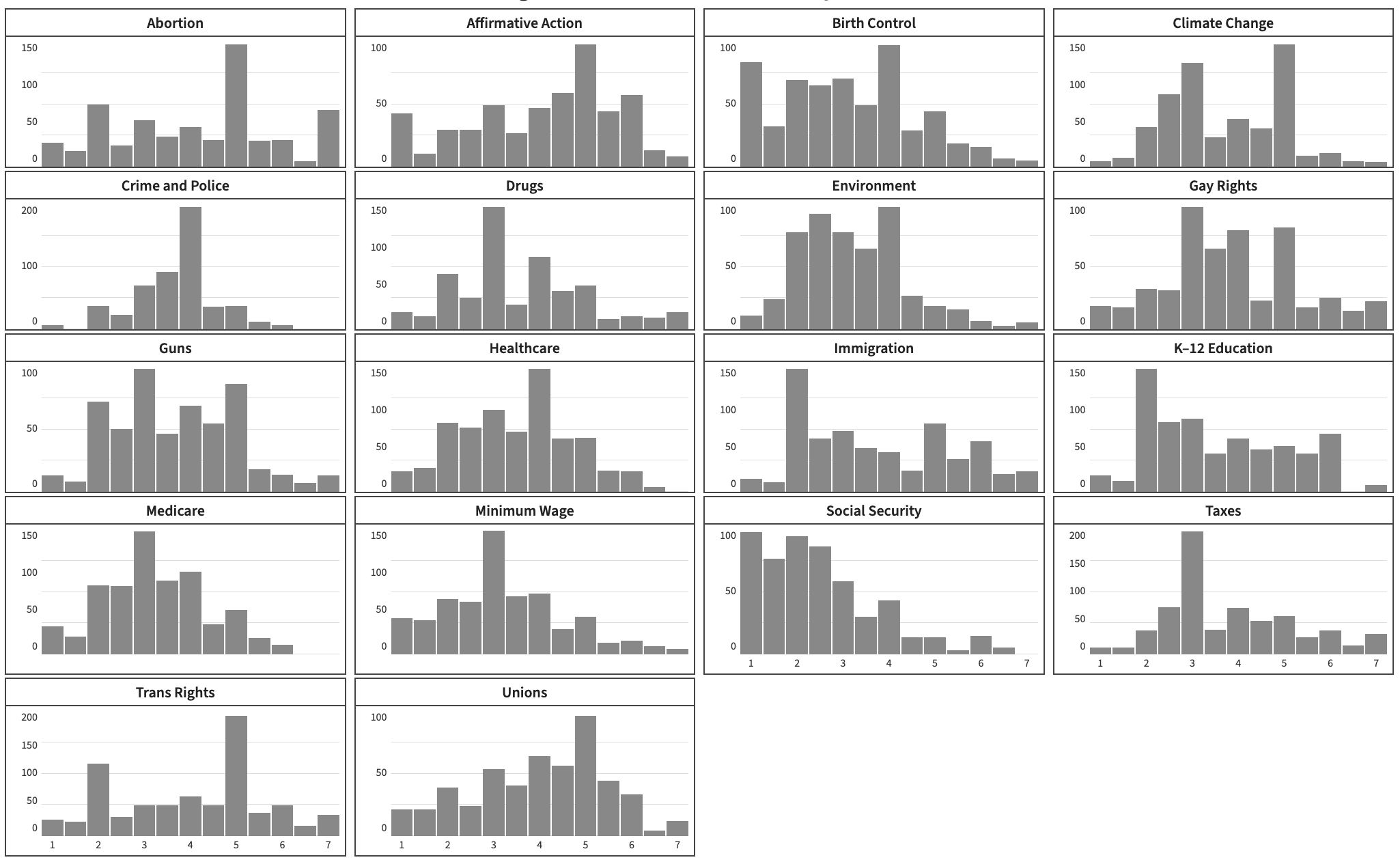
In other words, empowering voters may make for more extremism — a point we’ve made before. People genuinely disagree.
Second, Broockman says people are not nearly as stubborn or hard to persuade as we might think. Deep canvassing, meaning showing up at people’s doors and having a genuine conversation about a political issue, replicates. It produces durable shifts of up to a few percentages points.
Here’s a recording of a similar talk from Broockman.
Image of the Week
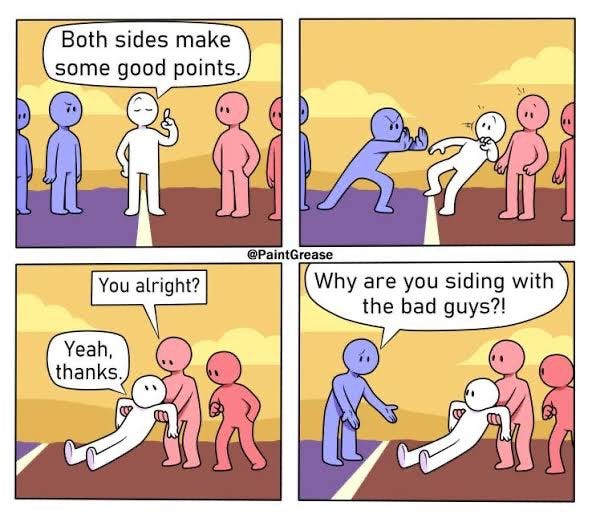
via @frozenaesthetic
Thanks for writing this! As a practitioner, I had no idea this event happened, before I read this post.
I also hadn't seen the presentation David Broockman made a few years ago shown in this post. I watched it, and I was impressed. His graphs maybe are from 2013, but he said they look similar as of a few years ago.
David explained that a major concern of his was an elite misconception that the American public is "moderate" across many topics. As his graphs show, the American public was better described as "heterodox" or "inconsistent", with a substantial number having views more extreme than those of most politicians — shown as ratings below 3 or above 5 on his 1-7 scale.
I think his concern is reasonable and correct, though my concern is more about the description of the country as "polarized." Again looking at the graphs, at most 2 (climate change and trans rights) of the 14 issues studied followed a classic "polarization" distribution, which would show many views on both edges and few in the middle. Instead, the views were usually fairly evenly distributed across the political spectrum, with some looking a bit like normal distributions (e.g., gay rights, healthcare), and a few showing obvious skew toward liberal positions (e.g., Social Security, Medicare).
Mina Cikara's work in this post expands this to show that not only is the public not classically "polarized" along a single dimension, groups also have views across multiple dimensions. Issue positions of groups are all across the space, not only on the edges as one may expect in a "polarized" environment.
Were there any conflict resolution or peacebuilding experts invited to this conference? The US academic community seems to have missed almost entirely that our field exists and has been focused on research and intervention on depolarization for over 50 years. I'm grateful a new book by Cherian George on "Fighting Polarization" acknowledges the work of our community.