

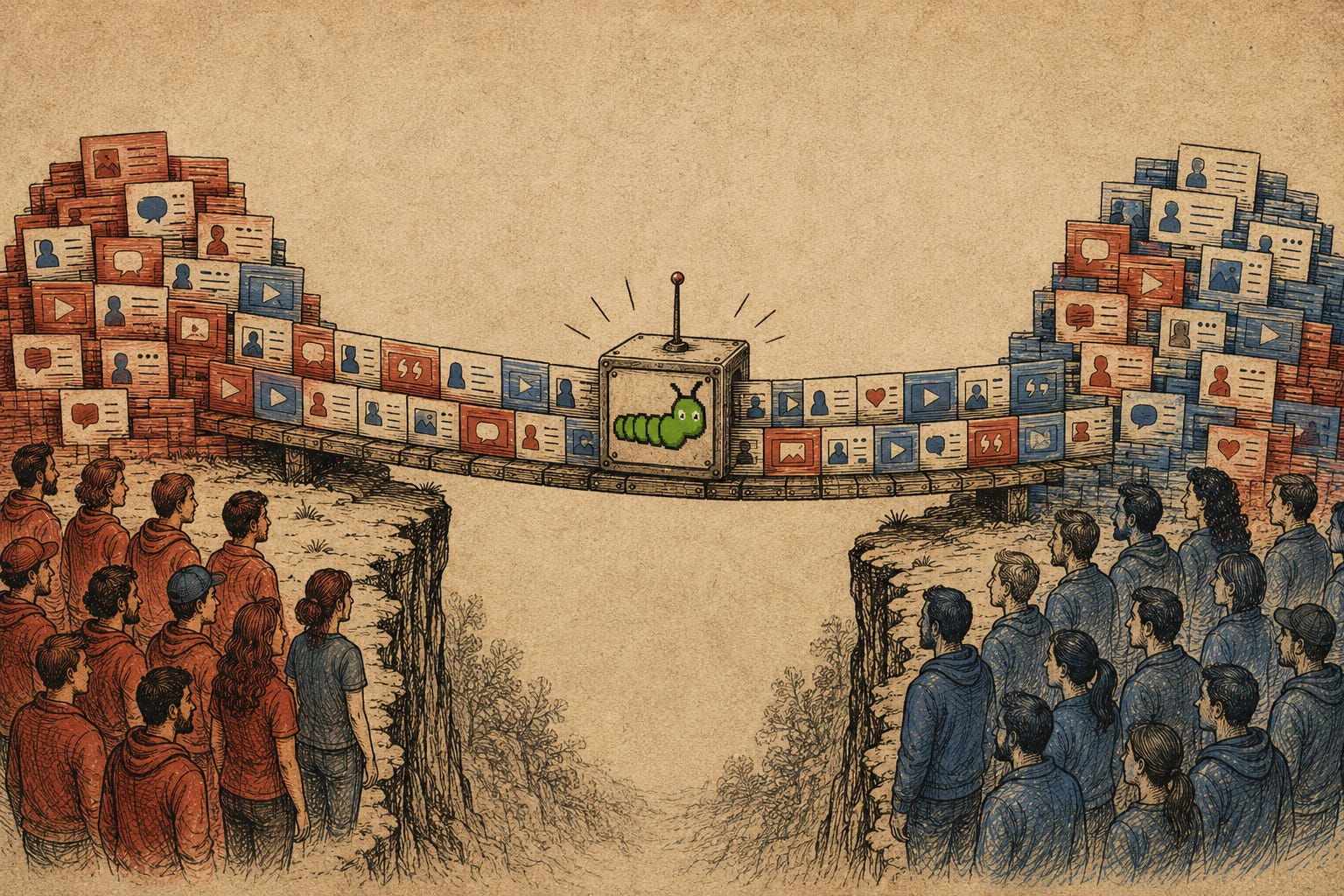
Throughout the motley history of social media, one thing has remained remarkably consistent: the platform decides what you see. You can follow, mute, like, and block, but the machinery that actually assembles your information environment has been mostly out of reach.
As of today, you can take the algorithm into your own hands. MySky is a modern algorithmic feed running on Bluesky and the open ATProto network, with a settings panel that shows you the whole ranking pipeline exactly as it runs. For the first time, you can directly control your social media recommender. Further, this recommender is specifically designed to help bridge complex divisions between groups.

Yes, we know BlueSky has a reputation as a place for lefties. We built MySky there first because it’s the only app that currently supports third party feed algorithms (protocols not platforms), but also because this sort of lopsided-ness is exactly the sort of thing that a bridging feed should help with. If you’re a conservative or just put off by the amount of liberal complaining on BlueSky, why not give MySky a try?
The Recommender You Control
Most recommendation systems do their work in three stages: First, the system finds a pool of possible posts. Then it ranks those posts according to some definition of value. Finally, it makes adjustments, for example preventing the same person or topic from taking over the entire feed. These choices are normally buried deep inside a platform’s logic. In MySky, they are visible in a settings panel.
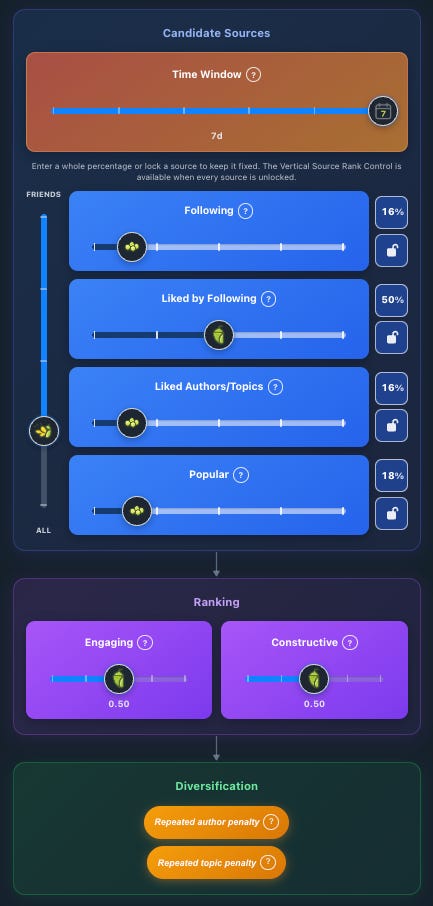
Every stage of this is controllable. MySky can draw from people you follow, posts those people liked, authors and subjects you have shown interest in before, and popular posts from across the network. And more importantly for better conflict, you can adjust the balance between ranking by engagement and ranking by constructive content.
Built for constructive disagreement
Bridging-based ranking is a rapidly developing method for building recommender systems that effectively cross conflict divides. Our team built MySky based on the results of the the Prosocial Ranking Challenge, where we tested five alternative ranking algorithms in the feeds of nearly 10,000 Facebook, X, and Reddit users for six months. One of the best performers succeeded in reducing affective polarization by simply upranking bridging content and downranking toxicity. We’ve implemented this as “constructive” ranking in MySky.
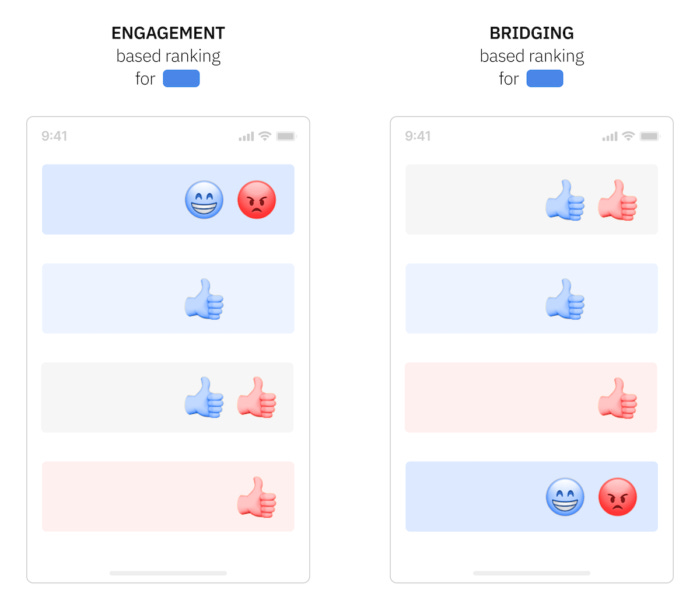
“Constructive” is not a synonym for polite! Passion and even anger can be constructive. What matters is whether a post shows reasoned argument, personal experience, curiosity, respect — a genuine attempt to communicate across difference. These are the attributes MySky scores using Google’s experimental Perspective API, minus negatives like insult, identity attack, and moral outrage.
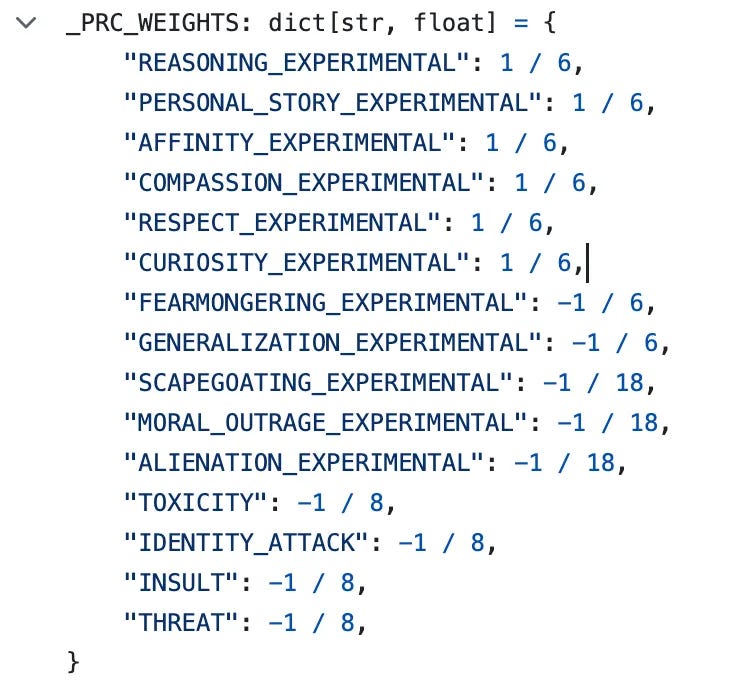
In MySky, engagement and constructiveness are weighted equally by default. But nothing is opaque or locked in. You can turn constructiveness down and get something closer to a conventional engagement-ranked feed, or turn engagement down and rank principally on the character of the content itself.
More and better bridging
This is version one of bridging, and over the next few months MySky will go much further.
Bridging within communities. Right now MySky scores constructiveness the same way for everyone, but the divides that matter are often local: the type of content that is constructive for American partisans won’t help a fandom at war with itself. We want to bridge within communities, as defined by topic, by the social graph (the clusters of people who actually talk to each other), or by membership in private group. Each community has its own divisions, so each needs its own bridges.
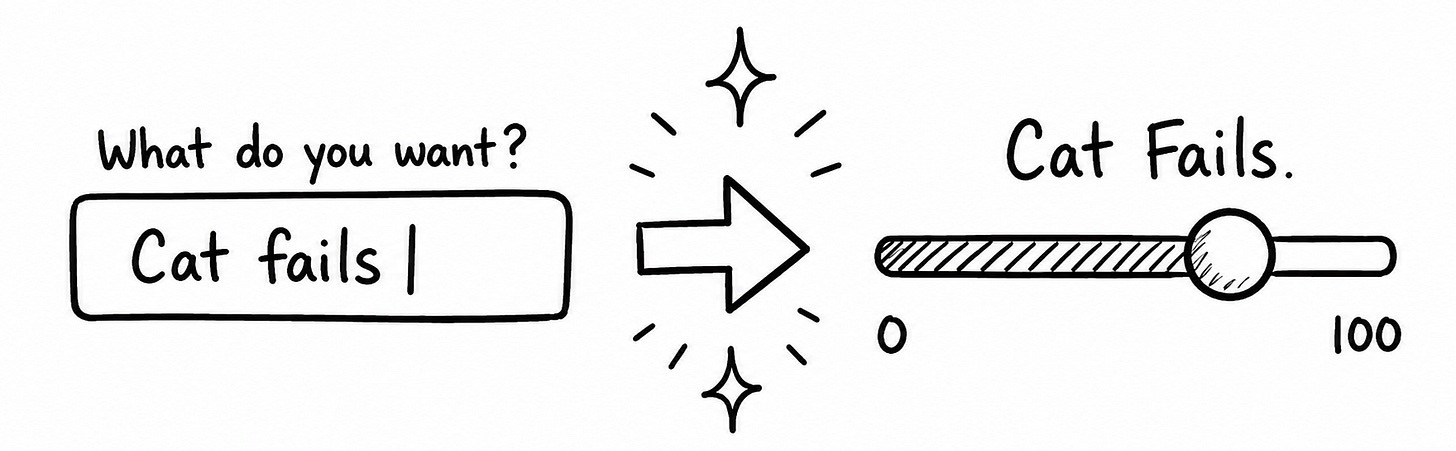
Prompt-based control. Sliders are just the beginning! We’re currently working on infrastructure to let you describe your ideal feed in your own words. The idea is to turn prompts into controls. Type a description of a type of content you want to see more (or less) of, and it will instantly create a new slider in your settings.
Different types of bridging. We are currently using content-based signals, based on the Perspective API bridging classifiers, which look at what each post says. There are also user-based signals, which look at who approves. For example, “diverse engagement” methods reward content endorsed by people who normally disagree, as Community Notes does. Alternatively, network-based measures capture the social distance between users. Each of these captures a different kind of diversity — what people say, who they interact with, how they behave — and the best system will likely combine them. A recent paper, AI and the Future of Digital Public Squares, maps the possibilities.
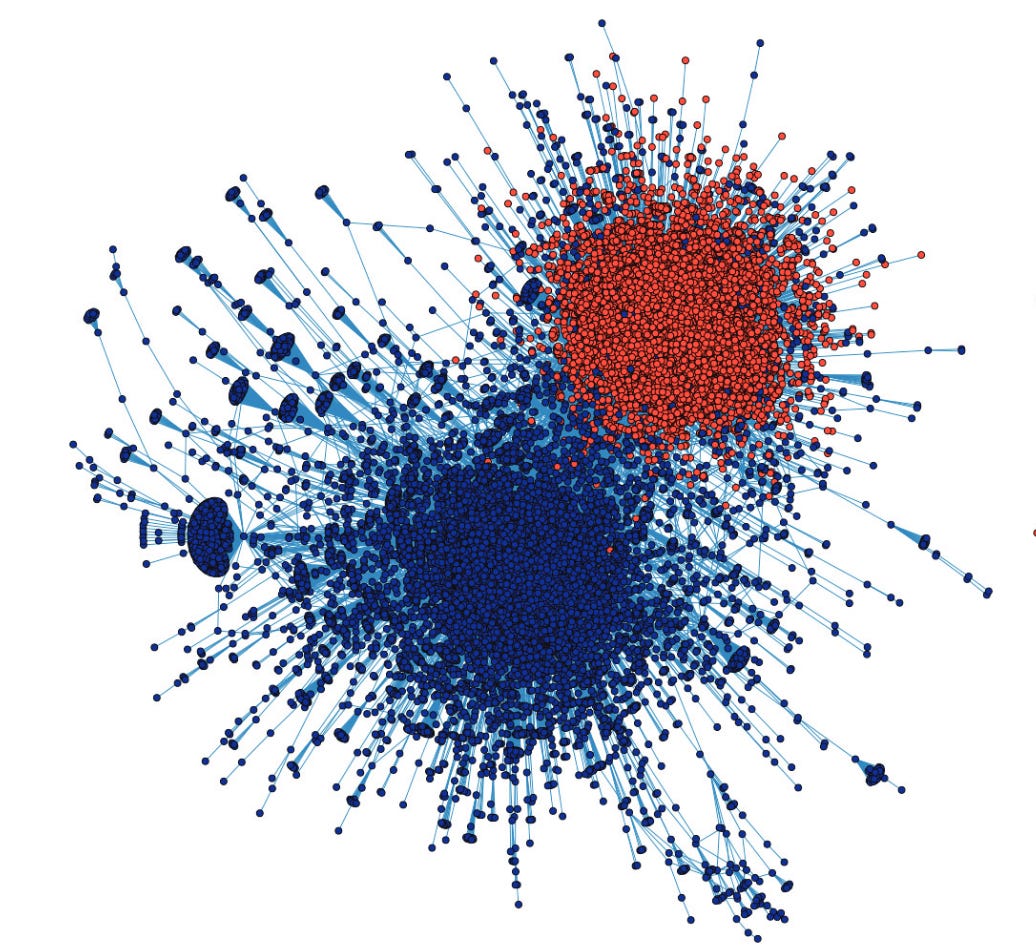
Different ways to measure the effectiveness of bridging. The Prosocial Ranking Challenged measured the effect of our test algorithms on affective polarization surveys, one of the standard ways political scientists measure polarization at the level of national politics. But this is only one way to measure outcomes, and it relies on collecting expensive survey data. There are also a number of potentially illuminating on-platform signals: how often people engage positively vs. negatively with outgroup content, how often people post content that itself scores high on bridging signals, how connected or divided the social network between two opposing groups is, and so on.
These measures are potentially very useful because it’s a lot easier to collect this information than to field surveys. We plan to measure these sorts of outcomes in a pilot experiment with EuroSky later this year.
Still, survey data is the gold standard because much of what we care about (addiction, polarization, well-being, etc.) is not fully visible from online behavior. One reason bridging algorithms are rare is that there’s almost no public data connecting what people see to how they feel afterward. This is why we are collecting survey data from consenting users to build public, anonymous models to more reliably predict offline outcomes from online data.
An algorithm built for better conflict
MySky is the first production feed that is both user-controllable and bridging by design. It’s also very much a work in progress, and many new features will be appearing shortly. Aside from providing a better user experience, we will also be doing open science to prove that this algorithm really is “better.”
There is no value-free algorithm. Every feed is already making choices; MySky makes them visible, changeable, and bridging by default. Try the feed. Move the sliders. Then tell us: how would you ask your algorithm to handle conflict?
GreenEarth is not the First Social Media Algorithm users control.
Long before Facebook, there were email lists and LiveJournal. Both had simple algorithms, that amounted to "give me what I asked for, in chronological order". They were not alone - those are simply the ones I remember because I personally used them.
When FaceBook came out, the term "social media" was redefined to include only services with opaque algorithms designed to maximize profit, such as FaceBook, Twitter, etc. The social media I continued to frequent were no longer considered "social media" by e.g. traditional media - journalists used only the new definition.
But FaceBook, with its succession of harmful algorithms was in fact the new kid in town.
Of course you can argue "just give me what I asked for" does not constitute user control. In that case, I offer you BlueSky, which allows users a choice of algorithm, with more technically inclined users able to roll their own. It's old enough now that GreenEarth is probably more recent - based on this being the first time I've heard of it. But perhaps not, in which case I'll go back to pointing to LiveJournal and just about everything else of its generation.
GreenEarth, with an algorithm designed to reduce polarization, may be a good thing. But will its users get to control anything about it, or will it, like FaceBook, give users whatever is consistent with the service provider's organizational goals? Will its behaviour even be predictable to the average user, or will things simply get black holed - or boosted to the skies - for reasons confusing to their posters, just like FaceBook and all its ilk?